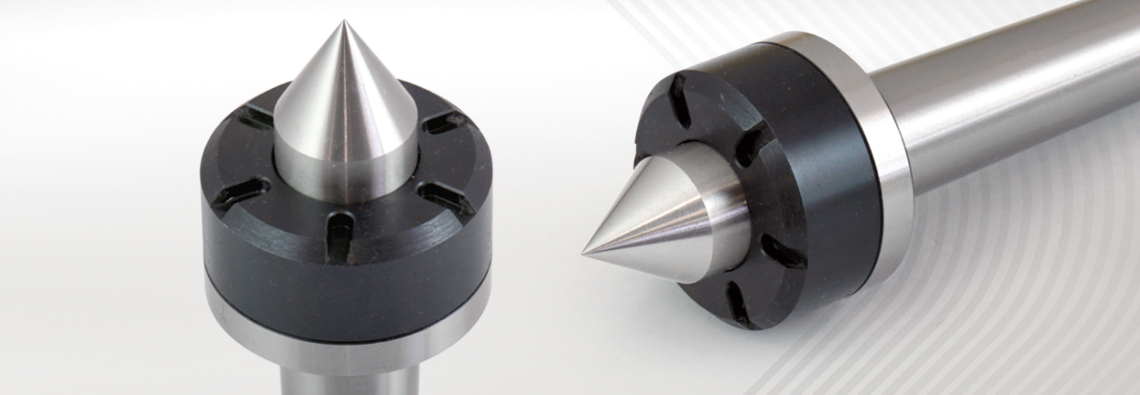
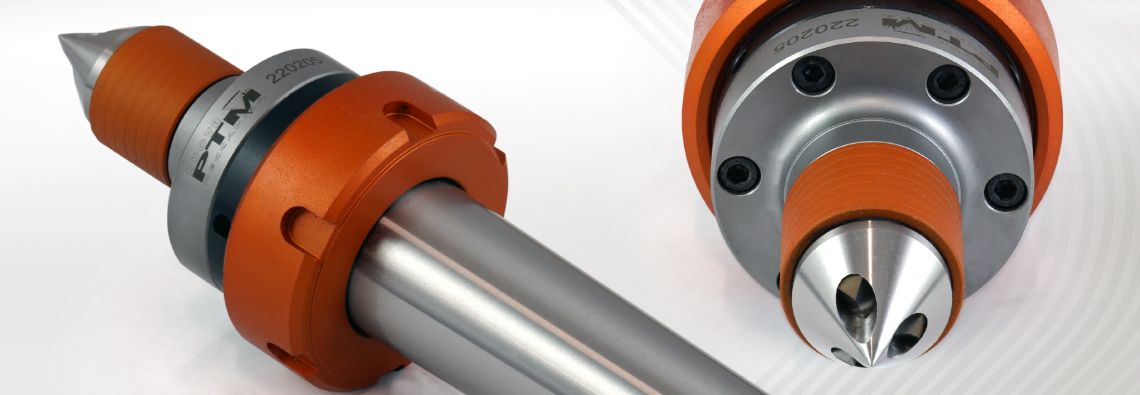

During turning operations, the rotating livecenters can reach temperatures exceeding 60°C
The rotating livecenters are produced with an internal permanent grease lubrication system with special gaskets that prevent the entry of shavings, dust or coolant. During the initial working hours it is normal for some grease to come out. Normally, no maintenance is required but a periodical check is recommended.
When using a tailstock that has not been used for a long period, it is advisable to start by running it for a few minutes at a reduced speed to allow the internal grease to resume its lubricating function.
Per prolungare la durata delle contropunte rotanti si consiglia una revisione periodica in funzione dei vari modelli:
Segnali indicativi che l’attrezzatura necessita di revisione sono:
In linea generale le tempistiche per la revisione dipendono comunque dalle condizioni generali di utilizzo. E’ consigliato l’utilizzo di pezzi di ricambio originali.
Â
For intensive use (high loads), it is advisable to use livecenters with extraction ring-nut which gives rigidity to the tool, eliminating bending or vibrations.
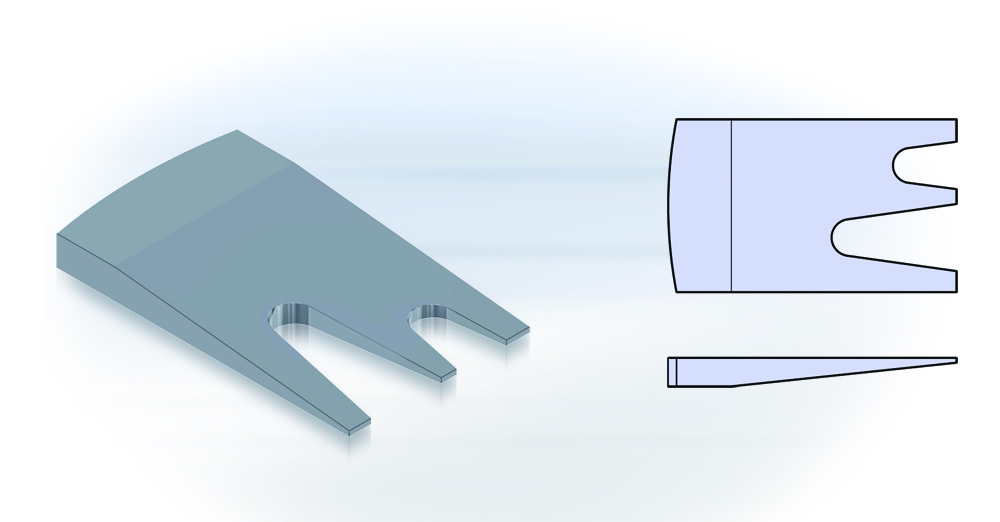
Our series of rotating livecenters with centering point support shaft can mount every type of interchangeable centering point (see catalogue). With the special tool, replacement is rapid. Before re-mounting a new centering point, clean the seat and coupling surfaces well.
Wedge to extract cusps - Cod. 20001
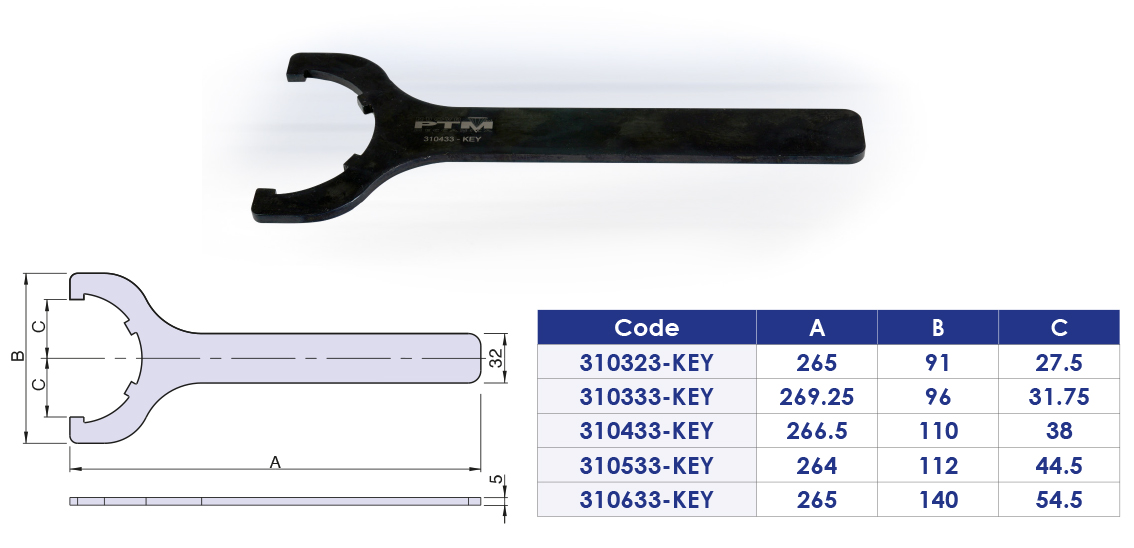
Hook spanner
|
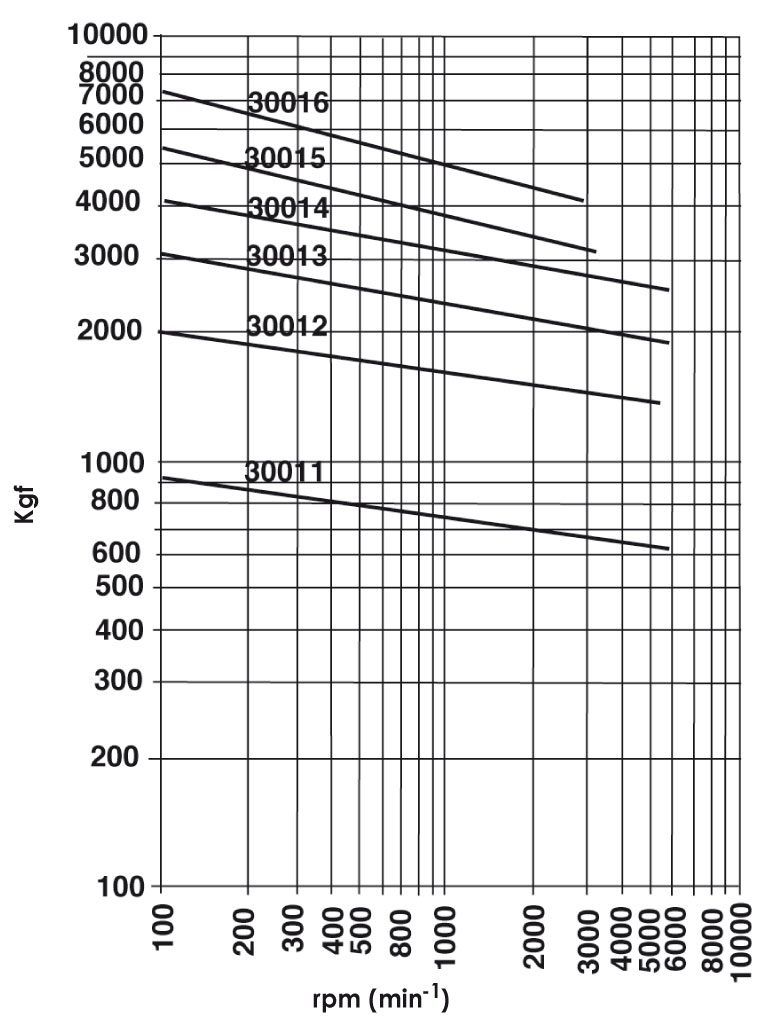
Radial load
|
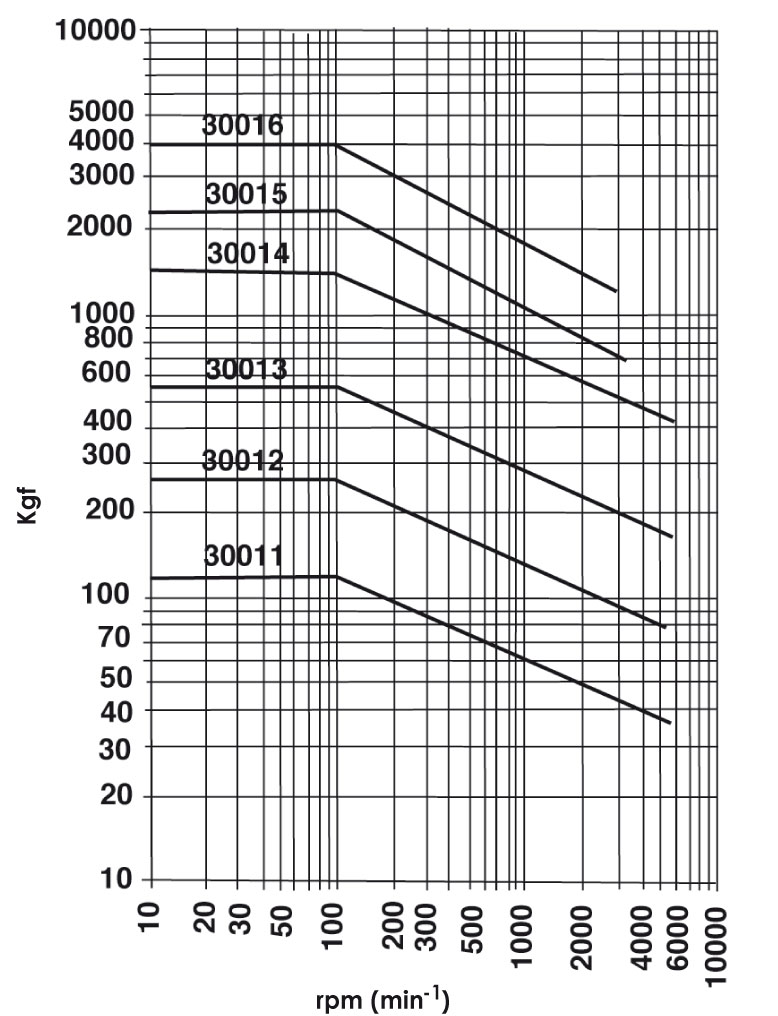
Axial load
|
UNI 521
CM = Taper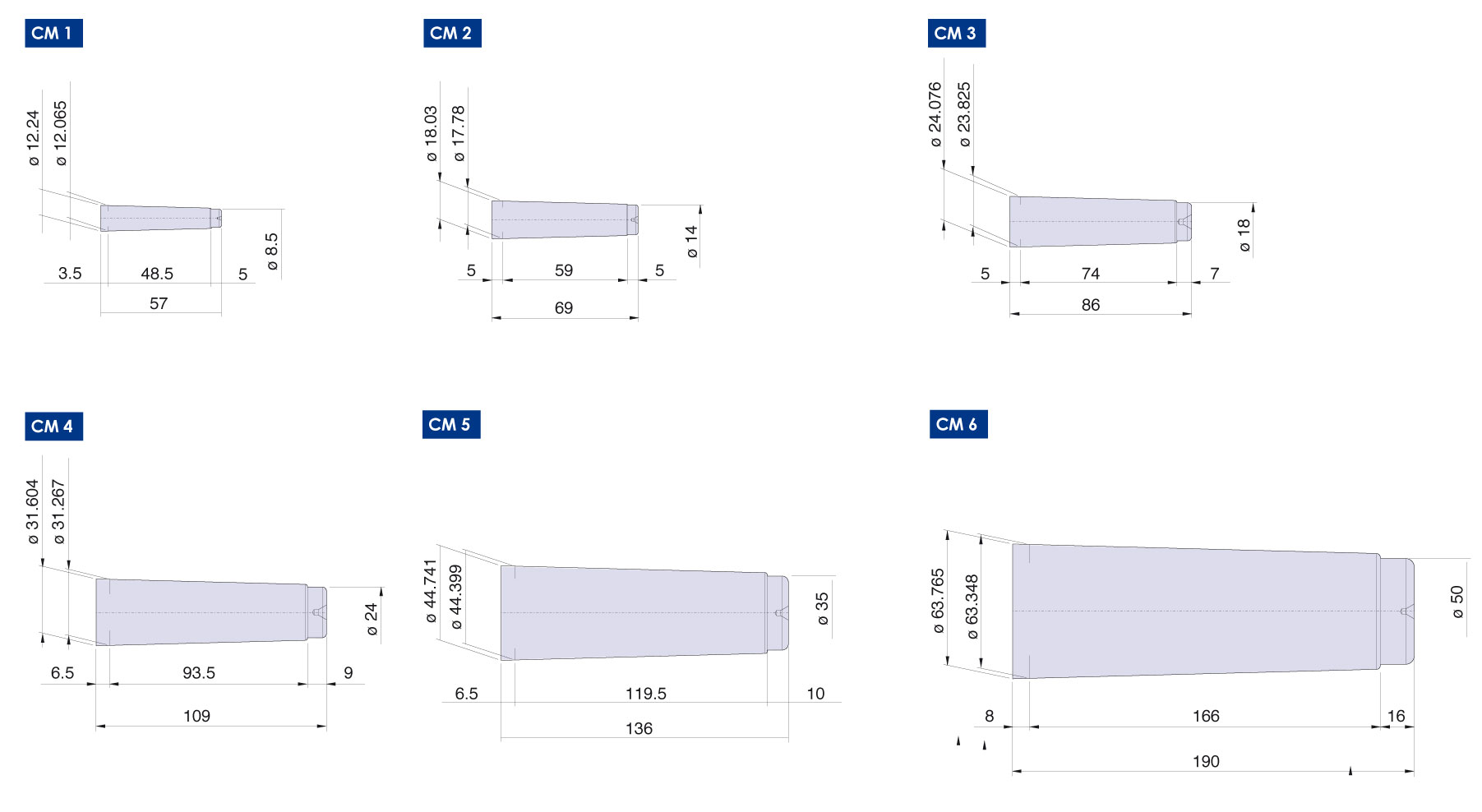
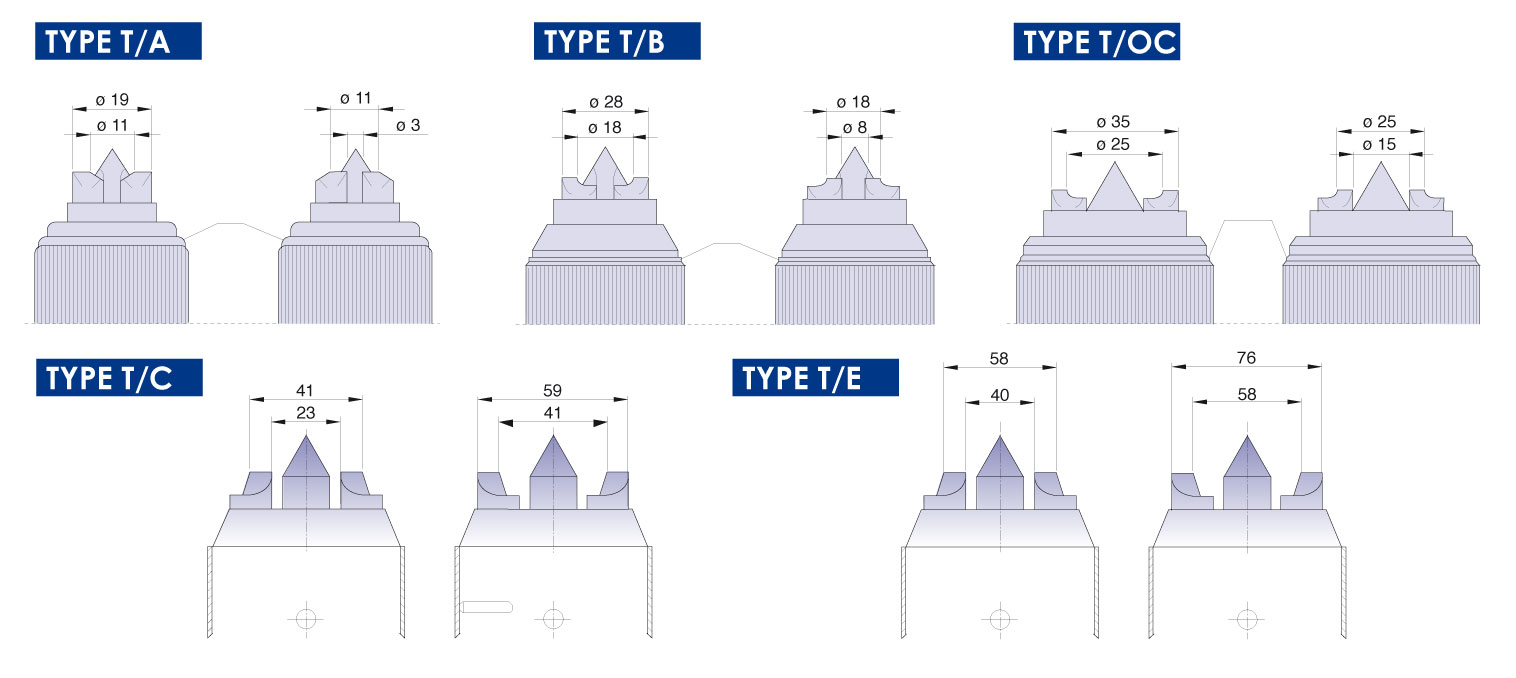
For correct functioning of the driver and for perfect grip on the piece, follow the indications given below.
Type T/A
For a working range from Ø 11 to Ø 5
For a working range from Ø 30 to Ø 11
Type T/B
For a working range from Ø 28 to Ø 18
For a working range from Ø 40 to Ø 28
Type T/OC
For a working range from Ø 25 to Ø 35
For a working range from Ø 35 to Ø 60
Type T/C
For a working range from Ø 41 to Ø 59
For a working range from Ø 59 to Ø 110
Type T/E
For a working range from Ø 58 to Ø 76
For a working range fromØ 76 to Ø 130
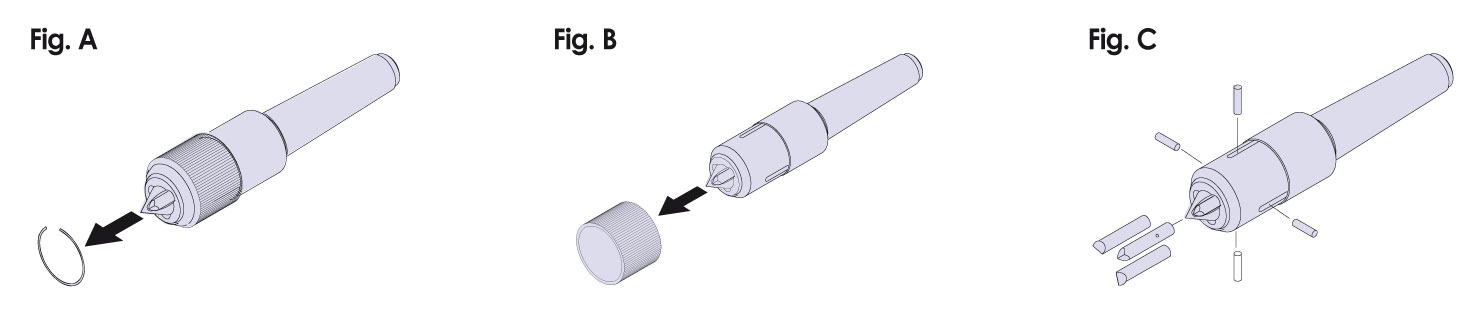
To obtain the above values, remove the stop ring and the knurled sleeve (Fig. A-B). Remove the pins and the driving teeth (Fig. C).
Turn the driving teeth according to the required type in the diagram and replace all the removed parts, greasing the sliding housings, preferably with heatproof grease.
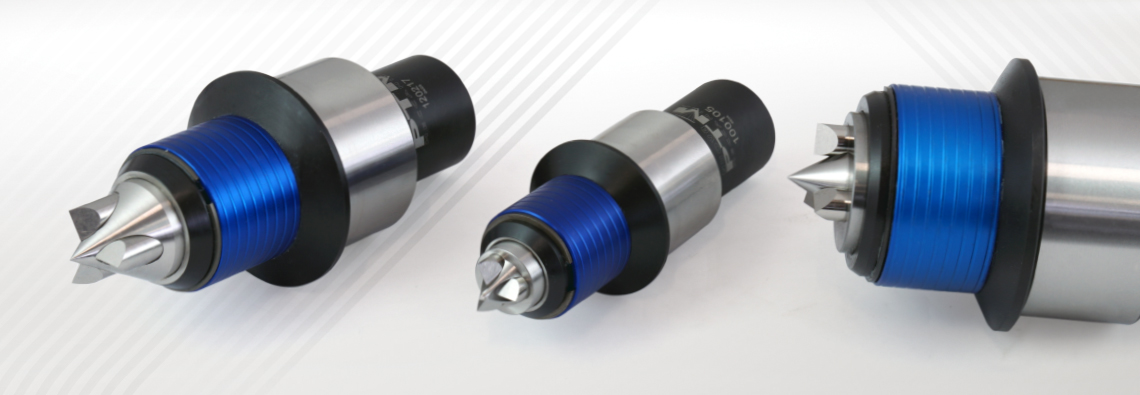
The face drivers have an operating range that goes from Ø 5 mm to Ø 110 mm, depending on the model and the claws used. In case of wear, the claws can be rotated by 180° and re-used (see catalogue). However, this rotation could change the diameter of the operating range.
The period between maintenance interventions (with any replacement of claws) depends on the use of the driver and the material processed.
A claw can be sharpened to a maximum of 2 mm below its original size.
Our face drivers have a sprung central point. The replacement is straightforward and does not require any special tools, just grasp it by hand and remove it from the seat. The operation can also be performed using the tool mounted on the machine.
Under no circumstances must the rear spring-tensioning cap be adjusted.
If the point overheats during operation:
If the point breaks during operation:
If the point locks during operation:
Vai ai nostri servizi per assistenza e manutenzione delle contropunte »